There is no third option in Google's AI Mode. When a user asks a question and an AI-generated answer appears, your brand is either cited in that response or it receives zero visibility. No position two. No page two. Nothing. This is the binary reality of AI search — and it changes everything about how …

There is no third option in Google’s AI Mode. When a user asks a question and an AI-generated answer appears, your brand is either cited in that response or it receives zero visibility. No position two. No page two. Nothing.
This is the binary reality of AI search — and it changes everything about how businesses need to think about their digital presence.
The May 2026 Core Update Makes This More Urgent
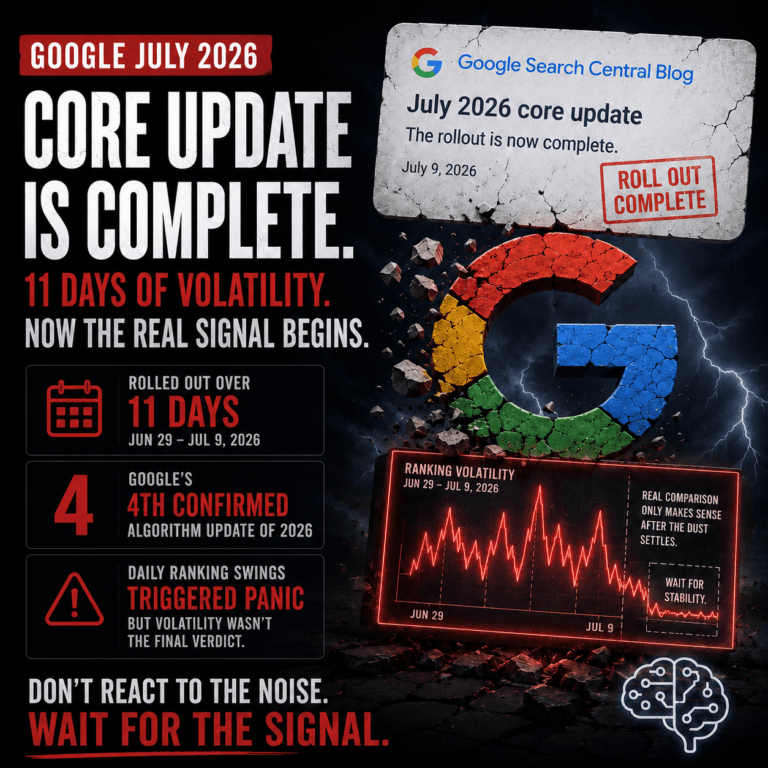
Google launched its fourth core update of the year in late May 2026. The timing was deliberate — it lands directly after Google I/O 2026 and the rollout of AI Mode to all users. This isn’t a routine tweak. The May Core Update is the fourth confirmed ranking-related update of 2026, and the pace of changes signals that Google is iterating aggressively as AI becomes more deeply integrated into Search infrastructure.
Sites with thin content, mass-produced AI copy, or outdated structures were most exposed. If your traffic shifted during that rollout window, that volatility was expected — core updates typically take two to three weeks to fully roll out, and conclusions drawn from early data during that stretch were usually premature.
Your Search Console Data May Be Unreliable
Here’s something most businesses don’t know yet: Google confirmed a bug in Search Console that incorrectly logged impressions from May 2025 to April 2026, and historical data will not be corrected.
That means any performance baseline you built over the past year needs to be reassessed. If you’ve been benchmarking growth against impression data from that window, your reference point is flawed. This is a significant issue for anyone running monthly SEO reports — and it’s worth flagging to clients before they ask why the numbers look off.
What Actually Earns AI Citation
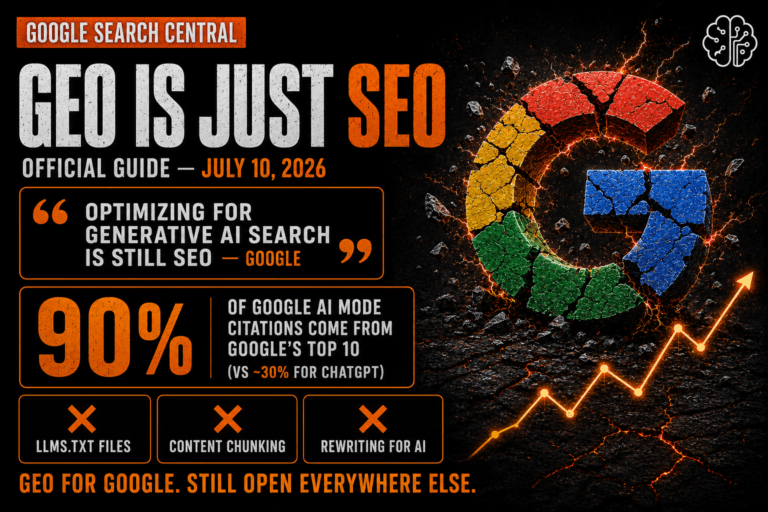
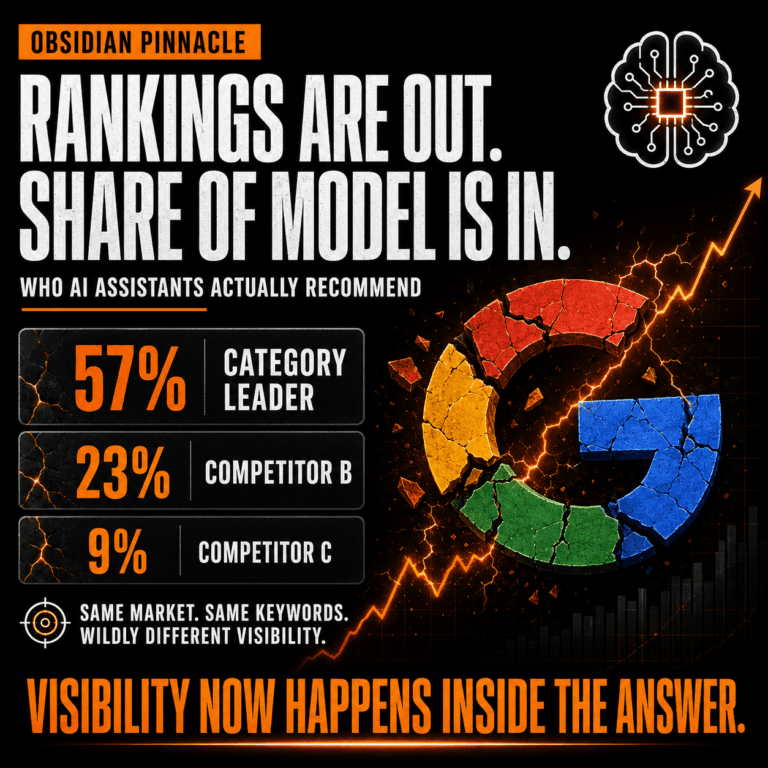
In AI Mode, there are no traditional link positions below the AI response — brands are either cited in the answer or receive no visibility at all.
So what earns a citation? Google’s own guidance is clear: unique, non-commodity content that reflects genuine expertise, original research, or first-hand experience. Generic summaries that AI can produce itself add no citation value. The content has to bring something that only your brand can provide.
This is exactly the infrastructure we build at Obsidian Pinnacle — websites and content architectures that are structured for machines to read, cite, and trust. Not just designed to rank, but engineered to be referenced.
The Window to Act Is Now
The businesses that move during a core update cycle — auditing content, fixing technical foundations, and building citation-worthy assets — are the ones that come out ahead when the dust settles. The ones that wait are left chasing a moving target.
If you’re unsure where your brand stands in AI search right now, that’s the first thing to find out.
Let’s map it out together. Schedule a consultation and we’ll show you exactly where you’re visible — and where you’re not.
Related reading: Page-One Rankings No Longer Mean AI Visibility · Google Just Gave You a GEO Dashboard
Sources: Google Search Status Dashboard, May 2026 core update coverage (Search Engine Land), Google I/O 2026 announcements (blog.google)