Google's July 2026 core update finished rolling out on July 9, after 11 days of volatility that had rank trackers lighting up red and orange across every SEO tool on the market. It was Google's 4th confirmed algorithm update of 2026 — consistent with the update cadence Google has kept through 2026. If your rankings …

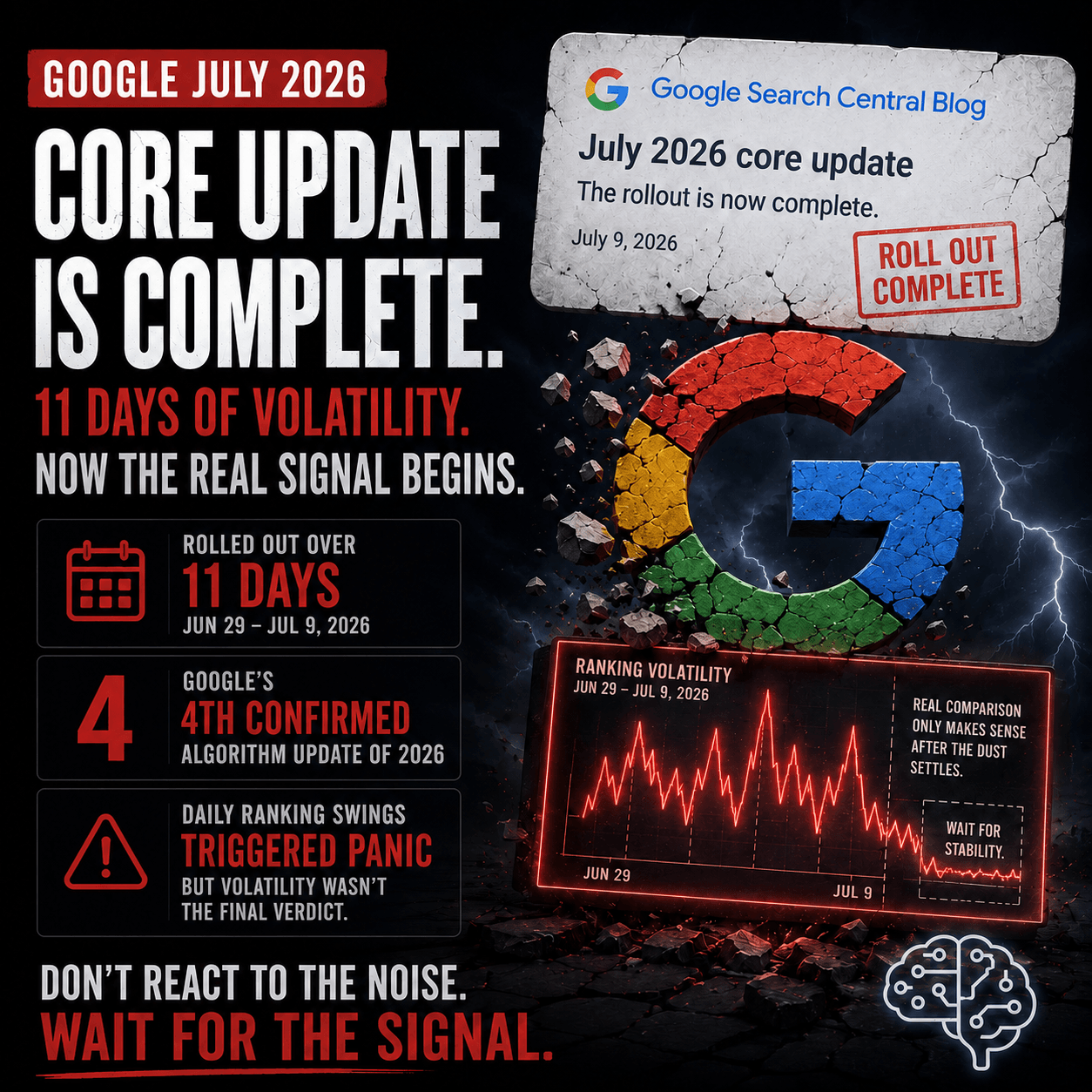
Google’s July 2026 core update finished rolling out on July 9, after 11 days of volatility that had rank trackers lighting up red and orange across every SEO tool on the market. It was Google’s 4th confirmed algorithm update of 2026 — consistent with the update cadence Google has kept through 2026.
If your rankings moved during those 11 days, you weren’t imagining it. If they’re still moving now, that’s the part worth paying attention to.
Don’t React to the Noise
The instinct after any core update is to start making changes immediately: rewrite the page that dropped, delete the one that tanked, publish five new posts to “signal freshness.” Almost none of that is useful in the first week or two.
Core updates roll out gradually and re-process the index in waves. A ranking you see on day 3 isn’t the same as the ranking that settles on day 20. Acting on day-3 data is like rearranging furniture during an earthquake — you’re not fixing anything, you’re just adding your own noise to Google’s noise.
Wait for the Signal
Our read, watching this rollout alongside client accounts: early ranking swings were significant, but not fully stabilized even a week after Google marked the update complete. That’s normal. It’s also exactly why “wait and measure” beats “panic and rewrite” every single time.
The practical version of this advice:
Give it two to three full weeks post-rollout before treating any ranking change as real. Track the trend line, not the daily snapshot — a single day’s position is a data point, not a verdict. And separate what actually changed (content quality, E-E-A-T signals, page experience) from what merely got reshuffled as Google re-weighted existing signals.
What’s Actually Worth Doing Right Now
Instead of reactive rewrites, this is the window to audit calmly: which pages lost visibility across the entire 11-day window, not just at the peak of volatility, and whether the drops cluster around thin content, outdated information, or weak topical depth — the things core updates consistently reward and punish.
That’s a different exercise than firefighting, and it produces better decisions.
The Pattern Behind the Pattern
Four confirmed algorithm updates in 2026 alone means “the algorithm changed” is no longer a useful alert on its own. What matters is whether your visibility is built on fundamentals that survive volatility — genuine expertise, real user value, technical health — or on tactics that happen to work until the next rollout.
At Obsidian Pinnacle, we track core update impact across the accounts we manage the same way we’d want it tracked for our own site: full rollout window, trend over snapshot, and no reactive rewrites until the signal is actually clear.
Riding out an update and not sure what’s real movement versus noise? Book a consultation and we’ll walk through your data together.
Related reading: AI Visibility Is Measurable Now · Google’s CEO Just Confirmed What Smart Businesses Already Know
Sources: Google Search Central (July 2026)
Kevin