Most businesses assume that if they rank on page one of Google, they're covered. That assumption is now costing them. New research shows that over 73% of brands with page-one Google rankings receive zero mentions in AI-generated responses. Traditional search rankings and AI visibility are no longer the same KPI — and treating them as …

Most businesses assume that if they rank on page one of Google, they’re covered. That assumption is now costing them.
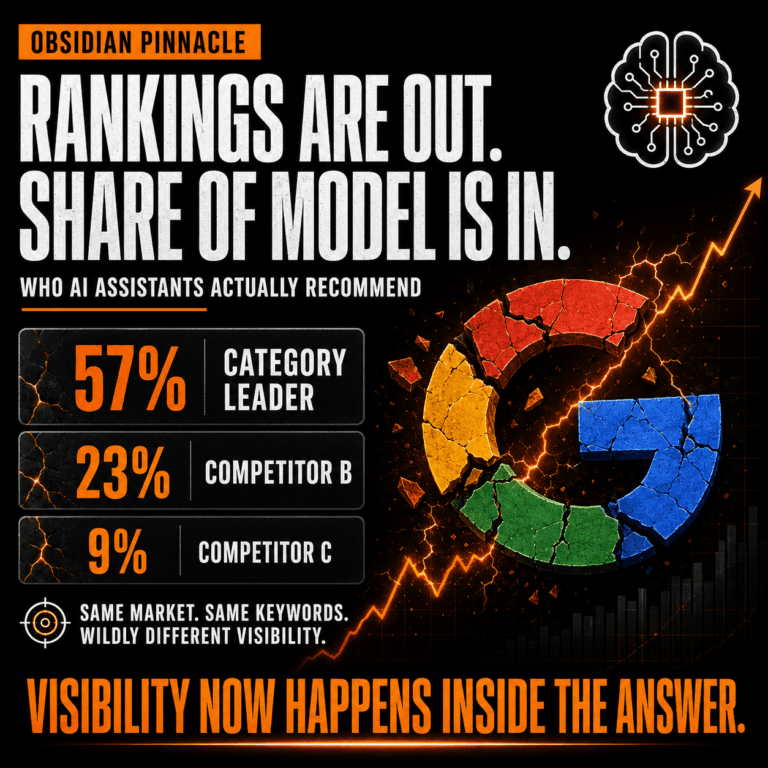
New research shows that over 73% of brands with page-one Google rankings receive zero mentions in AI-generated responses. Traditional search rankings and AI visibility are no longer the same KPI — and treating them as one is one of the most expensive mistakes a business can make in 2026.
Two Leaderboards, Not One
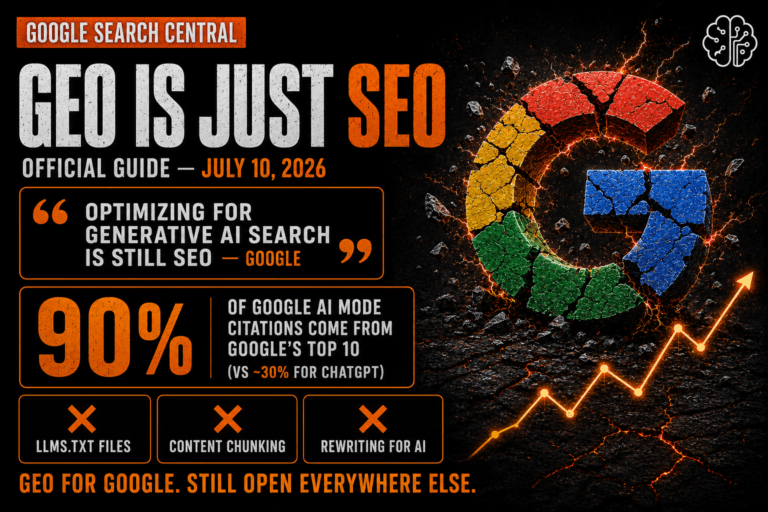
Google’s AI Overviews, AI Mode, and generative search surfaces pull from a different set of signals than the ones that decide your ranking position. You can sit in the top three results and still be completely invisible when a user gets an AI-generated answer.
This is the new reality of search. And it means your SEO report can look green while your brand is quietly being left out of the conversations that matter most.
What Actually Drives AI Visibility
The brands showing up in AI responses share a common thread: they are cited, trusted, and mentioned across the web — not just ranked.
Studies now show that brand mentions on authoritative external sites correlate three times more strongly with AI visibility than backlinks alone. Google’s own AI Optimization Guide reinforces this — original perspectives, first-hand expertise, and non-commodity content are the primary signals that earn inclusion in generative responses.
This is a structural shift. Link acquisition alone is no longer enough. Earned brand mentions, authored expertise, and content that only your team could produce — that is what gets cited.
What Google Is Enforcing Right Now
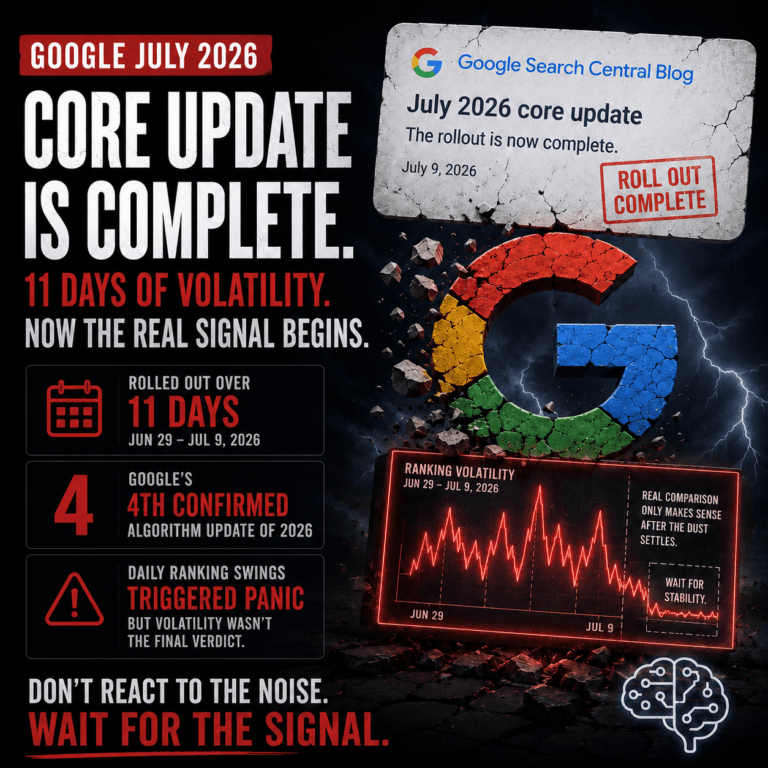
Google also updated its documentation in late May 2026 to confirm it may now use spam report submissions to take manual action against policy violations. This is a significant change — spam reports were previously treated as informational. They can now directly trigger penalties.
For any business with thin, templated, or low-effort content, this is a cleanup signal, not a future concern.
What This Means for Your Digital Strategy
At Obsidian Pinnacle, this is exactly what we build for. AI search visibility requires the same foundation as strong traditional SEO — fast, technically sound websites with clean data structures — but it also requires content and brand architecture that machines can cite and trust.
If your current strategy is optimized purely for rankings, it’s time to expand the scope. The businesses winning in AI search are the ones being talked about, not just ranked.
Ready to build for both? Schedule a consultation and let’s map out where your brand stands in AI search today.
Related reading: In Google’s AI Mode, You’re Either Cited or You Don’t Exist · Schema Markup Has a New Job in 2026
Sources: Google Search Central Documentation (May 2026), Onely AI Visibility Research (2026)