AI Overviews now trigger on 48% of global Google searches, up from just 18% in March 2025. For most queries, that means an AI-generated summary sits between your business and the person searching, deciding whether your brand gets mentioned at all before they ever scroll to a ranked list. That shift is why a new …


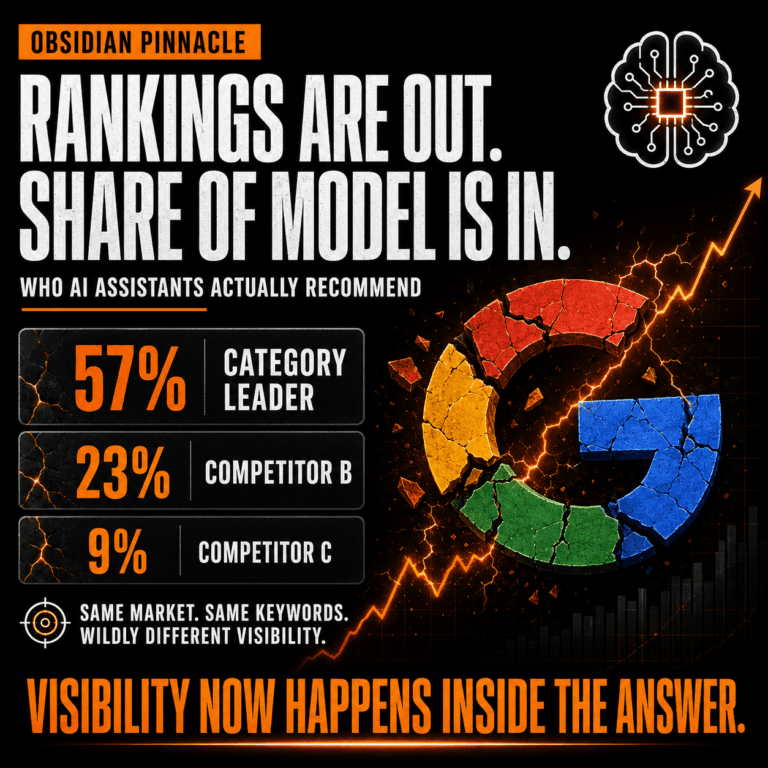
AI Overviews now trigger on 48% of global Google searches, up from just 18% in March 2025. For most queries, that means an AI-generated summary sits between your business and the person searching, deciding whether your brand gets mentioned at all before they ever scroll to a ranked list. That shift is why a new metric is gaining ground among marketers who track visibility seriously: Share of Model, or how often your brand shows up in AI-generated answers relative to your competitors for the queries that matter to your business.
Share of Model isn’t a replacement for rank tracking. But it answers a question rank tracking can’t: not where do I appear, but do I appear at all when an AI system is doing the summarizing.
Position Still Matters, Just Not the Way It Used To
Data from 2026 studies shows position #1 in traditional search results carries roughly a 33% chance of being cited inside an AI Overview. Position #10 carries about 13%, a 60% drop-off. So ranking well is still worth something, it raises your odds of being pulled into the summary. But it’s a probability, not a guarantee, and plenty of well-ranked pages never get cited at all. Being cited carries its own separate payoff: brands that appear in AI Overviews see 35% higher organic click-through and 91% higher paid click-through than uncited competitors on the same queries.
Citations Are Earned, Not Bought
Roughly 82% of AI citations trace back to earned media, and 94% come from non-paid sources altogether. That rules out simply buying your way into visibility. What does move the needle: content with concrete numbers and data points saw a 41% lift in AI visibility in recent optimization studies. Practitioners currently treat a 10-25% citation rate, the share of your tracked queries where your brand actually gets cited, as a healthy benchmark to aim for.
This is exactly the kind of visibility gap we help clients close at Obsidian Pinnacle: structuring pages so the clearest, most citable version of the answer lives near the top, backed by real numbers instead of vague claims.
The Practical Move
Start tracking citation rate alongside rank position for your priority queries. Pick a handful of questions your customers actually ask AI tools, check who gets cited, and see where you stand relative to competitors. If you’re not showing up, the fix usually isn’t more content, it’s content built around specific, citable numbers.
Want to know your brand’s actual Share of Model? Book a consultation and we’ll show you exactly where you stand against competitors in AI search.
Related reading: Google Just Gave You a GEO Dashboard. Here’s What It Does and Doesn’t Tell You. · In Google’s AI Mode, You’re Either Cited or You Don’t Exist
Sources: Omnibound, Ahrefs (2026)
Kevin