For years, schema markup was primarily a rich result tool. You added FAQPage schema to get the accordion snippet. You added HowTo schema to get the step-by-step visual. You added Review schema to get the star ratings. That era is over. In 2026, schema markup's most important job is convincing AI Mode that your content …


For years, schema markup was primarily a rich result tool. You added FAQPage schema to get the accordion snippet. You added HowTo schema to get the step-by-step visual. You added Review schema to get the star ratings. That era is over.
In 2026, schema markup’s most important job is convincing AI Mode that your content is credible enough to cite.
How AI Mode Actually Uses Schema Now
Google AI Mode uses structured data as a trust and verification layer during answer synthesis; not as a display trigger. When Gemini assembles an AI-generated response, it uses schema to verify claims, establish entity relationships, and assess whether a source is credible enough to reference. A page with accurate, content-matched schema has a meaningfully higher chance of being cited in AI Mode; even when no rich result ever appears in traditional search.
The practical implication: schema audits need a new objective. The question is no longer “does this schema trigger a rich result?” It’s “does this schema help AI systems understand and trust what this page is about?”
FAQ and HowTo schema are now effectively inert for rich results; Google deprecated them earlier this year. But Organisation, Article, LocalBusiness, and Product schema; implemented accurately and matched to the primary content of each page; are active AI citation signals right now.
AI Visibility Is Won Before the Search Happens
Search Engine Land’s analysis from that week makes a point that most SEO strategies still haven’t caught up to: winning AI citations requires influencing the pre-search phase. By the time a user types a query, AI systems have already been shaped by what they’ve indexed across news, authoritative content, and external brand mentions.
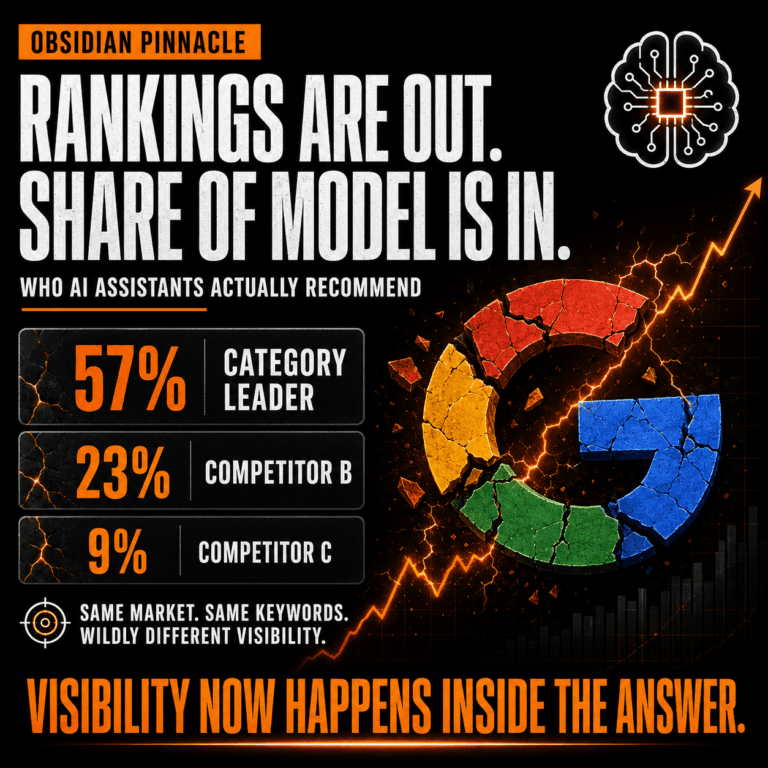
The brands that show up most consistently in AI answers are not always the ones with the most optimised pages. They’re the ones that have built enough presence across credible external sources that AI systems treat them as default references for their category.
This changes how content strategy should be scoped. Keyword targeting is still relevant; but it’s no longer the primary lever for AI visibility. Brand presence across authoritative external publications, consistent entity signals, and content that gets referenced rather than just ranked; these are the upstream inputs that determine downstream AI citation rates.
Link Building Needs a Unified Brief
A new framework published in early June 2026 on Search Engine Land introduced “link intent” as the organising principle for modern link building: every link-building effort should simultaneously serve traditional authority signals, referral traffic, and AI search visibility.
Links that exist purely for domain authority, with no realistic referral value and no brand mention context, are increasingly marginal in an AI search environment. The links that matter are the ones that appear in content AI systems trust; where the mention itself, not just the hyperlink, contributes to how AI models understand your brand’s relevance to a topic.
What This Means in Practice
At Obsidian Pinnacle, this is the framework we apply across every client engagement. Schema that’s matched to content and structured for AI extraction. Content placed on external sources that AI systems index and trust. Link building scoped around brand authority; not just domain metrics.
The businesses that treat these as separate workstreams are leaving AI visibility on the table. The ones that integrate them are building the kind of presence that compounds.
Ready to audit your AI search infrastructure? Book a consultation and we’ll map exactly where your brand stands across every layer that matters.
Related reading: Your Site Might Be Ranking on Google and Invisible to AI · Page-One Rankings No Longer Mean AI Visibility
Sources: Search Engine Land (June 1, 2026)