Google's CEO said it plainly in late May 2026: AI will reshape Search from a tool that finds information into a system that runs tasks on a user's behalf. That's not a distant prediction; it's the architecture Google is already building. And for businesses still optimising purely for rankings, it's a fundamental shift that demands …


Google’s CEO said it plainly in late May 2026: AI will reshape Search from a tool that finds information into a system that runs tasks on a user’s behalf. That’s not a distant prediction; it’s the architecture Google is already building.
And for businesses still optimising purely for rankings, it’s a fundamental shift that demands a new way of thinking.
From Information to Action
The traditional Search model is simple: user types a query, gets a list of links, clicks through. That model is being retired. In its place, AI Mode handles the query, synthesises an answer, and increasingly, completes the task directly; booking, purchasing, comparing, summarising.
For content strategy, this means transactional and service pages can’t just rank. They need to be structured in a way that AI agents can read, understand, and act on. Schema, clear page structure, and unambiguous calls to action are no longer nice-to-haves; they’re functional requirements for agent-era visibility.
Users Are Behaving Differently Already
New clickstream research published in late May 2026 showed AI Overviews changing how users move through search results. Reverse scrolling patterns and longer SERP evaluation times signal that users are spending more time assessing before they click; not less.
The implication: content that earns trust at the SERP level; through clear titles, strong descriptions, and brand recognition; is more valuable than ever. Getting the click is no longer just about ranking position; it’s about whether your brand registers as credible before the user even lands on your page.
The Most Durable AI Search Strategy Is Also the Oldest One
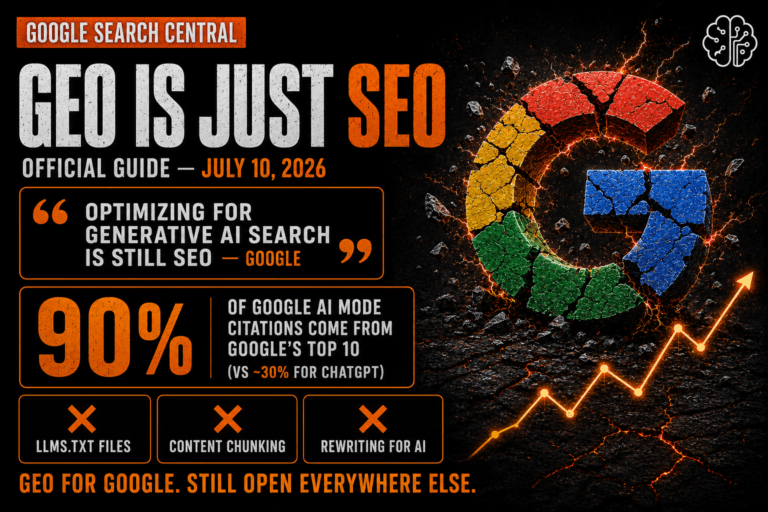
Search Engine Land’s analysis from that week cut through the noise: the businesses most likely to survive AI search disruption are the ones with real, recognisable brands. Not the ones with the most optimised schema or the most aggressive GEO tactics; the ones that people already trust.
This connects directly to what Google’s own data has been showing: brand mentions on authoritative sites outperform backlinks as an AI visibility signal. Preferred Sources rewards repeat visitors. The algorithm is, in a roundabout way, rewarding the same thing good marketing has always rewarded: a brand worth remembering.
What to Do With This
At Obsidian Pinnacle, this is the framework we build around. Technical foundations that agents can navigate; content that earns citations; and brand architecture that builds the kind of recognition that survives algorithm changes.
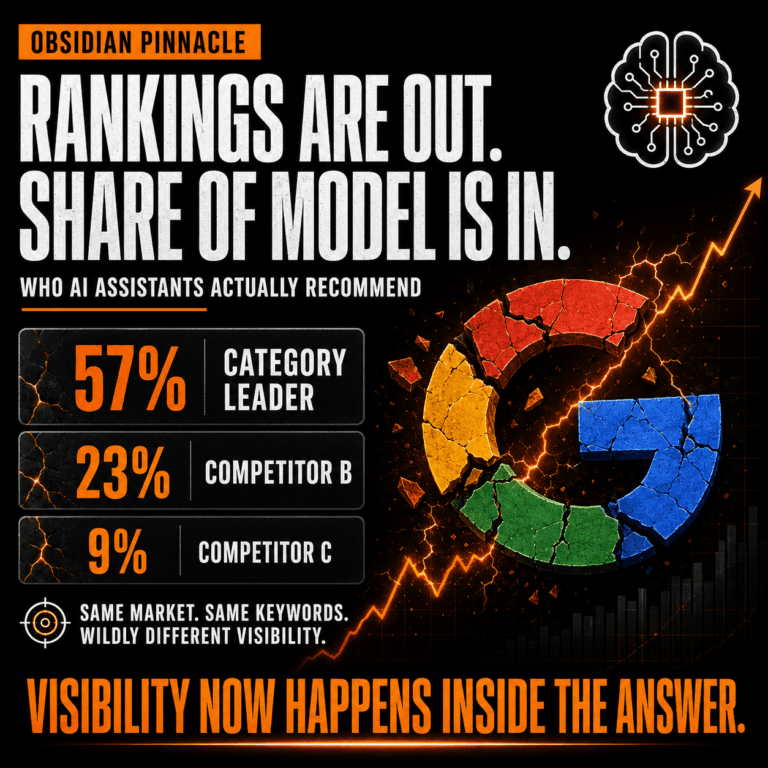
The businesses asking “how do I rank in AI search” are asking the right question one step too late. The better question is: “does my brand have the kind of authority that AI systems cite by default?”
Let’s find out where you stand. Book a consultation and we’ll audit your AI search presence from the ground up.
Related reading: Google Just Put Ads Inside AI Answers · AI Visibility Is Measurable Now
Sources: Search Engine Land (May 26-28, 2026)